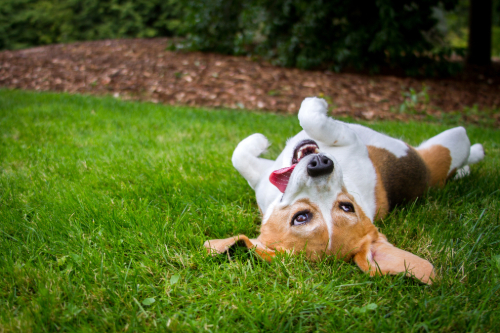
When pet owners ask, “Why do dogs roll in the grass?”, the answer often comes down to scent, instinct, communication, and sensory enjoyment. Dogs roll in the grass for reasons that range from natural behavior inherited from their ancestors to day-to-day emotional expression. While this habit can look silly or dramatic, it often tells you more about your dog’s needs and instincts than you might think. North Jersey Animal Hospital in Wayne, NJ supports pet owners who want to better understand the habits and quirks of their companions. If you ever have questions about your dog’s behavior, call (973) 595-8600 or book an appointment online.
Why Dogs Roll in the Grass: Instincts Behind the Behavior
Dogs share several instincts with their wild relatives, and rolling in the grass is one of the most recognizable. While domesticated dogs live very different lives from wolves, foxes, and coyotes, these inherited behaviors appear today in ways that sometimes seem humorous or puzzling. Rolling in the grass allows dogs to express instincts that have existed for thousands of years.
Instinctive Scent Masking
One of the strongest instincts behind this behavior involves scent. In the wild, rolling in natural odors helps animals mask their own smell. This instinct once helped ancestors hide from prey or predators. Even though your pet eats from a clean bowl and sleeps on a comfortable bed, these ingrained patterns still influence modern behavior. Grass carries natural outdoor scents that may feel meaningful or stimulating to your dog.
Communication With Their Pack
Dogs also use scent to communicate. Rolling transfers natural smells onto their coat, allowing them to “share information” when interacting with other dogs. Even if your dog doesn’t live with other pets, this instinctive behavioral pattern continues. You might notice more rolling after dog-park visits or outdoor walks where many scents overlap.
Returning to Familiar or Comforting Smells
Dogs often roll in the same spots repeatedly. This may be a sign that the area smells familiar or comforting in a way that supports their natural behavior. Scents in the grass can remind them of previous walks, other animals, or simply a favorite location that feels emotionally satisfying.
Grass Rolling as a Form of Physical and Sensory Enjoyment
Beyond instinct, many dogs roll in the grass because the texture, temperature, and movement feel wonderful. This behavior can be a pleasure-driven activity that provides stimulation and variety to their routine.
A Natural Back Scratch
Grass can feel satisfying on a dog’s back, shoulders, and neck. Dogs can’t reach many areas of their body, so rolling becomes a full-body stretch and massage. Some dogs perform dramatic shoulder drops, wiggles, or spins that signal pure enjoyment.
Cooling Down on Warm Days
Grass often feels cooler than pavement or dirt. On warm days, the moisture and shade in grassy areas can help dogs cool down. Rolling spreads their weight across the surface so more of their body can experience that refreshing temperature change.
A Way to Release Energy
Many high-energy dogs roll in the grass when they feel playful, excited, or over-stimulated. For some, it becomes part of their zoomies routine. If your dog rolls enthusiastically during or after playtime, it may be their way of expressing happiness and release.
Behavioral and Emotional Reasons Dogs Roll in Grass
Not all grass-rolling is purely instinctive or sensory. Dogs also express emotion through full-body actions. Rolling in the grass can reflect their mood, environment, and daily experiences.
Joy and Playfulness
Happiness often drives rolling. Dogs who feel safe and content may flop into the grass as a form of relaxation. After a long walk or time spent outdoors, the open space may inspire rolling as an outlet for excitement.
Attention-Seeking Behavior
Some dogs learn that rolling triggers laughter, talking, or affectionate reactions. If your dog rolls and immediately looks to you for a response, they may be seeking interaction. Dogs are observant and will repeat behaviors that bring positive engagement.
Transition Between Activities
Rolling sometimes occurs after a dog finishes something energy-heavy, such as running or sniffing. This behavior helps them shift from one activity to another. The movement helps release physical tension and transition to a calmer state.
Environmental Cues That Trigger Grass Rolling
The environment around your dog can also encourage rolling. Dogs pick up on subtle shifts in scent, temperature, and stimulation. These cues may influence their desire to roll more frequently in certain places.
Smells From Other Animals
Dogs have powerful noses capable of detecting scents humans can’t imagine. Grass may hold traces of wildlife, other dogs, or natural elements like soil microbes. These invisible scent layers encourage dogs to roll to gather more information.
Different Types of Grass and Terrain
Your dog might prefer tall grass over short grass or vice versa. Some dogs enjoy rolling on soft, thick grass, while others choose drier areas. Texture plays a larger role in behavior than many pet owners realize.
Seasonal Changes Outdoors
During different seasons, grass collects various outdoor scents. Spring brings blooming vegetation, summer brings warmth, fall brings leaves, and winter brings a crisp, distinct smell. These seasonal variations give dogs a constantly changing environment to explore.
Should You Ever Be Concerned About Grass Rolling?
While most grass-rolling is harmless, some cases might signal a dog reacting to something in their environment.
Skin Sensitivity or Irritation
Scratching or irritation can motivate rolling. If your dog rolls frequently and also licks, rubs, or scratches certain areas, it might indicate skin sensitivity. While rolling may offer temporary comfort, it can also be a sign that something needs attention.
Strong or Unpleasant Environmental Scents
Some dogs roll to override or “cover up” odors that bother them. If your dog suddenly begins rolling excessively in one area, they may be responding to a new environmental smell that draws their attention.
Behavior Changes Over Time
Changes in rolling behavior are worth noting. If your dog suddenly stops or begins rolling more often, it may reflect new patterns in their environment, stress levels, or daily routine. Paying attention to the change itself can help your veterinary team understand what’s going on. If you notice persistent or unusual rolling paired with other behavior changes, North Jersey Animal Hospital is here to help. Call (973) 595-8600 or book an appointment online.
How Pet Owners in Wayne, NJ Can Support Their Dog’s Natural Behavior
Supporting your dog’s natural behaviors involves understanding their motivations and giving them safe opportunities to express themselves. Grass rolling offers mental stimulation, physical comfort, and emotional satisfaction in an activity that feels both familiar and rewarding.
Here are ways to support your dog while observing their natural habits outdoors:
- Provide regular outdoor time so your dog can explore with their senses
- Give them space to roll safely in clean, low-traffic areas
- Pay attention to the locations your dog prefers
- Offer varied activities such as walks, structured play, and enrichment
- Keep an eye on changes in rolling behavior so you can share helpful details during veterinary visits
If you ever have questions about your pet’s behaviors or want to discuss their overall wellness, North Jersey Animal Hospital in Wayne is here to support you. Call (973) 595-8600 or book an appointment online to speak with our caring veterinary team.