
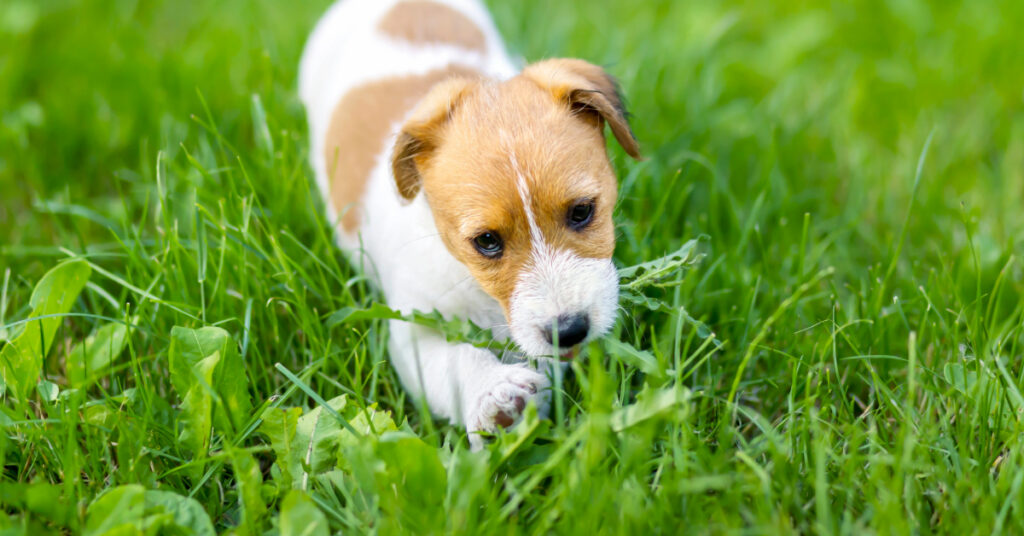
If you’ve caught your dog munching on grass in the backyard, you’re not alone. Grass eating is one of the most common behaviors in dogs, and it leaves most owners wondering: why do dogs eat grass? The honest answer is that there’s no single explanation, and in most cases, it’s a completely normal behavior. That said, there are situations where grass eating warrants a closer look.
Is It Normal for Dogs to Eat Grass?
Yes, dogs eating grass is considered normal behavior. Studies suggest that grass eating is widespread across domestic dogs and has even been observed in wild canids. Most dogs that eat grass are otherwise healthy, show no signs of illness, and don’t vomit afterward.
So if your dog occasionally snacks on the lawn, there’s usually no reason to panic. But understanding why dogs eat grass can help you recognize when the habit might signal something worth addressing.
Why Do Dogs Eat Grass? Common Theories
It’s Just Instinct
One of the most widely accepted explanations for why dogs eat grass is that it’s an inherited behavior rooted in their evolutionary history. Wild ancestors of dogs consumed prey animals whole, including the stomach contents, which often contained plant material. Grass eating may simply be an instinctive remnant of this behavior, especially in dogs that never show any negative reaction to it.
Dogs Eat Grass to Settle an Upset Stomach
Many dog owners believe their dog eats grass to induce vomiting when they feel nauseous and there’s some logic to this theory. However, research suggests this may not be as common as people think. Studies have found that less than 25% of dogs that eat grass actually vomit afterward, and most dogs don’t appear sick before eating it. It’s possible that some dogs do eat grass to soothe GI discomfort, but it’s not a universal explanation for why dogs eat grass.
Dogs Eat Grass Because They Like It
Sometimes the simplest answer is the right one. Some dogs appear to genuinely enjoy eating grass, particularly young, tender blades in spring. If your dog eats grass happily, shows no signs of distress before or after, and seems perfectly healthy otherwise, simple preference may be all the explanation you need.
Nutritional Needs or Fiber Deficiency
Some veterinarians and researchers have proposed that dogs eat grass to supplement their diet with fiber or certain nutrients. While evidence is limited, dogs fed lower-fiber diets have been noted to eat more grass in some studies. A diet evaluation by your veterinarian can help determine if nutritional needs are being met.
Boredom or Anxiety
Dogs that are under-stimulated, bored, or anxious may develop repetitive behaviors and grass eating can be one of them. If your dog eats grass compulsively or seems to do it primarily when left alone or under-exercised, this behavioral angle may be worth exploring with your veterinarian.
Is Eating Grass Bad for Dogs?
In most cases, eating grass is not harmful to dogs. However, there are some important exceptions:
- Grass treated with pesticides, herbicides, or fertilizers can be toxic to dogs, even in small amounts
- Grass in areas frequented by other animals may harbor parasites
- Certain plants that grow among grass such as wild mushrooms, foxtails, or toxic weeds can pose serious risks
If your dog eats grass from your own yard and you keep it free of chemical treatments, the physical act of eating grass is generally safe. The concern lies in what might be on or near the grass, not the grass itself.
When Should I Worry About My Dog Eating Grass?
Most grass-eating dogs don’t need veterinary attention, but certain patterns should prompt a call to North Jersey Animal Hospital:
- Your dog is eating grass frantically or urgently, especially if pacing or appearing distressed
- Your dog vomits every time after eating grass
- Your dog eats grass in large quantities every day
- Grass eating is accompanied by other symptoms like diarrhea, lethargy, or appetite loss
- You suspect your dog may have eaten grass treated with chemicals
Sudden changes in behavior, including a dramatic increase in grass eating, are worth discussing with your veterinarian, even if your dog seems otherwise healthy.
What to Do If Your Dog Eats Grass
For most dogs that occasionally eat grass without any negative effects, no action is required. Here’s a simple approach to managing the behavior:
- Ensure your yard is free of pesticides and herbicides
- Keep an eye on plants growing among the grass to remove anything potentially toxic
- Monitor your dog after grass eating to note whether vomiting occurs
- Speak with your vet if the behavior is frequent, compulsive, or associated with symptoms
Our team at North Jersey Animal Hospital in Wayne, NJ, can help you evaluate whether your dog’s grass eating is simply a quirky habit or a signal of an underlying concern.
Does Your Dog Need More Mental or Physical Stimulation?
If your dog seems to eat grass out of boredom or anxiety, increasing physical exercise and mental enrichment can sometimes reduce the behavior. Puzzle feeders, training sessions, new toys, and regular walks are all ways to engage your dog’s mind and body more fully. If anxiety appears to be a factor, the veterinary team at North Jersey Animal Hospital can discuss behavioral strategies and, if needed, appropriate treatments.
The Grass-Eating Habit: More Normal Than You Think
Dogs eat grass for all kinds of reasons: curiosity, instinct, preference, mild nausea, or simply because they can. The behavior is deeply common and, in the vast majority of cases, completely harmless. The key is staying observant, keeping your yard free of toxic substances, and reaching out to North Jersey Animal Hospital in Wayne, NJ, whenever you notice changes in frequency, urgency, or accompanying symptoms. Call (973) 595-8600 or book an appointment online. Your dog’s health is always worth the conversation.